
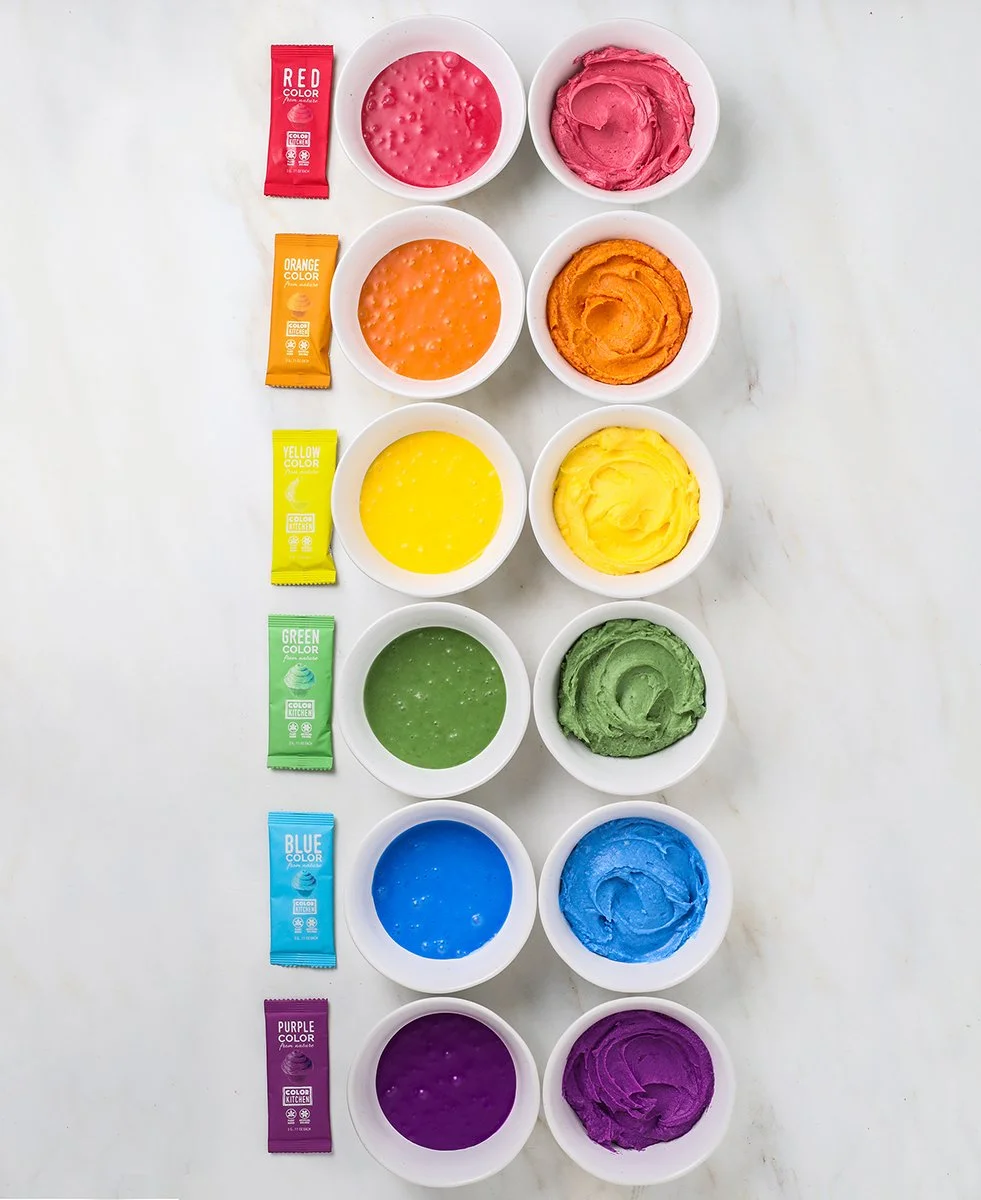
Our natural powder colors are water-soluble, which tends to create more vibrant colors in icing than frosting, given icing's higher water content. When first mixing, you'll notice the colors are more saturated in icing or glazes. However, when given time to saturate, the colors in frosting will fully develop and create deep, saturated colors as well.
Here are 2 basic recipes that are quick and easy to make:
Frosting
½ cup butter
2 cups powdered sugar
1 packet Color Kitchen packet
IcinG
2 cups powdered sugar
2 tablespoons water (or milk)
1 packet Color Kitchen packet
That's it — one packet of color per pint of frosting or icing. Mix the powder color first with the powdered sugar, before adding liquid. No separate diluting or mixing steps required.
The Difference
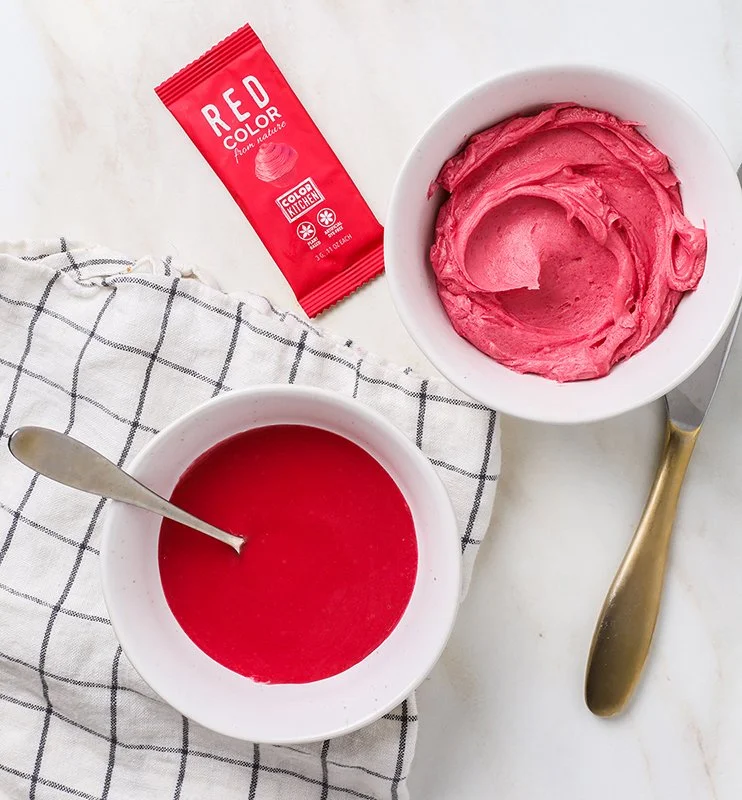
When first mixing batches, there is a real difference between the frosting and the icing. The frosting, with its butter base, can initially look a bit muted and pastel compared to the icing, which picks up color more quickly since it's just sugar and water.
But with a bit of time (1–2 hours), the colors in the frosting deepen and intensify. Overnight, the frosting and icing are basically the same shade.
The Takeaway
If you're using Color Kitchen powders (or natural powder colors in general), don't judge the frosting color right away. Butter-based frostings especially seem to need a little time for the pigment to fully bloom and even out. If you mix up a batch and the color looks lighter than you expected, let it sit for a bit before you decide you need to add more powder — it very well might catch up on its own.
This also makes planning ahead easy: if you're coloring a big batch for a party or event, you can mix everything the day before and trust that the colors will settle into their true, vibrant shade by the time you're ready to decorate.
That said, if you've given your frosting time to develop and it's still not as bold as you'd like, you can always add a bit more powder. Just sprinkle in a little at a time, mixing well between additions, until you reach the shade you're after. It's much easier to add more color than to try to lighten a batch that's gone too dark, so starting with ½ packet and building up from there is the safer approach.