
1. What they are made of
Artificial food colors, otherwise known as FD & C, are made from petroleum by-products. This process results in highly stable colors, but artificial dyes have known health issues from the chemically derived ingredients.
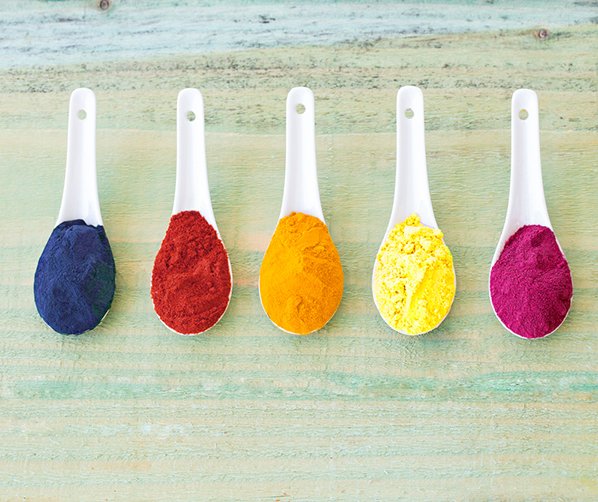
Natural food colors in powder form are primarily sourced from plants, formulated for use in baking and decorating. These plant-based pigments are extracted as a liquid and then spray-dried onto a carrier, which creates a stable, highly concentrated food color powder.
2. How they should be used
Artificial food colors are simpler to use, especially for those who lack experience. They mix easily and are designed to withstand the heat. However, these chemically originated colors have issues with color bleeding, some fading, and stain to the touch.
Natural colors are more complex to use. They require a stable and balanced neutral pH to perform best. Often highly concentrated, natural powders can require a longer development time to get the deepest shades. Plant-based colors can also have an earthy flavor when overused in frosting or icing with minimal flavoring.
3. The cost
Artificial dyes are cheaper and more easily accessible than natural colors. If you consider what each is made from, the cost difference should be clear.
Natural colors are more expensive in comparison, but the more experience you have, the less waste, which will save time and money, not to mention your peace of mind.
Many natural food color manufacturers offer discounts and resources for how best to use them.
SUMMARY
Color Kitchen is a big believer in education around all things dye-free. Understanding what makes our plant-based food colors different means you’ll be better equipped when using them.